Close

Weeks 11/12

Yeah, here are the last blogpost about our long journey. We are looking forward to our flight home with the incredible airplane A380. I like the gold standard service from Singapur Airlines, especially the warm cloth before the takeoff.

One day during the recent weeks, we discussed which things we missed about our life in Switzerland and which points we’re going to miss in Zuchwil about our long journey.

Jonas Maggi
I missed
  • the best cat ever (Murri)
  • friends and family including the cute kids Janosch and Mio
  • High-speed internet
  • my work including my team
  • my own office
  • the procap team
  • proper washing machines for clothes and dishes


  • family and friends – and the two superboys 😉
  • the best two cats ever (Murri und Häxli 😉 )
  • My work at the Sonnehuus and the Steiner School
  • a bed AND a table AND a bathroom AND two offices AND a kitchen AND a balcony AND a living room
  • “my” bathtub
  • reliable internet connection
  • Maggitime
We are going to miss
  • the incredible staff in the supermarket (so patient and friendly – it’s a pleasure to do the shoppings here. And yes, I prefer the personal experience instead the use the self-checkout.)
  • the endless JOGI-time (time for ourselves)
  • the camping life (in general)
  • the guided tours
  • the stunning scenery and the great variation of landscapes here in New Zealand
  • the plentiful breakfasts and dinners in a restaurant
  • the hiking tours with Maggi
  • the amount of time we could spend together
  • super tasty coffee 😉 😉 😉
  •  the awesome and epic friendliness of the people here in NZ and OZ
  • Variety of landscapes
  • Driving a big car 😉
  • Great beers and wines
  • Summer

Route

Day 77: Te Anau – Milford Sound

Day 78: Milford Sound – Invercargill

Day 79: Invercargill – Kaka Point

Day 80: Kaka Point – Dunedin

Day 81: Stay in Dunedin

Day 82: Dunedin – Moeraki

Day 83: Moeraki -Twizel

Day 84: Twizel – Mount Cook

Day 85: Mount Cook – Tekapo

Day 86: Stay in Tekapo

Day 87: Stay in Tekapo

Day 88: Tekapo – Christchurch

Day 89: Stay in Christchurch (visit Christchurch)

Day 90: Stay in Christchurch

Day 91: Day in Christchurch (packing day)

Day 92: flight back to Switzerland

special recommendations
Week 11:12

Milford Sound

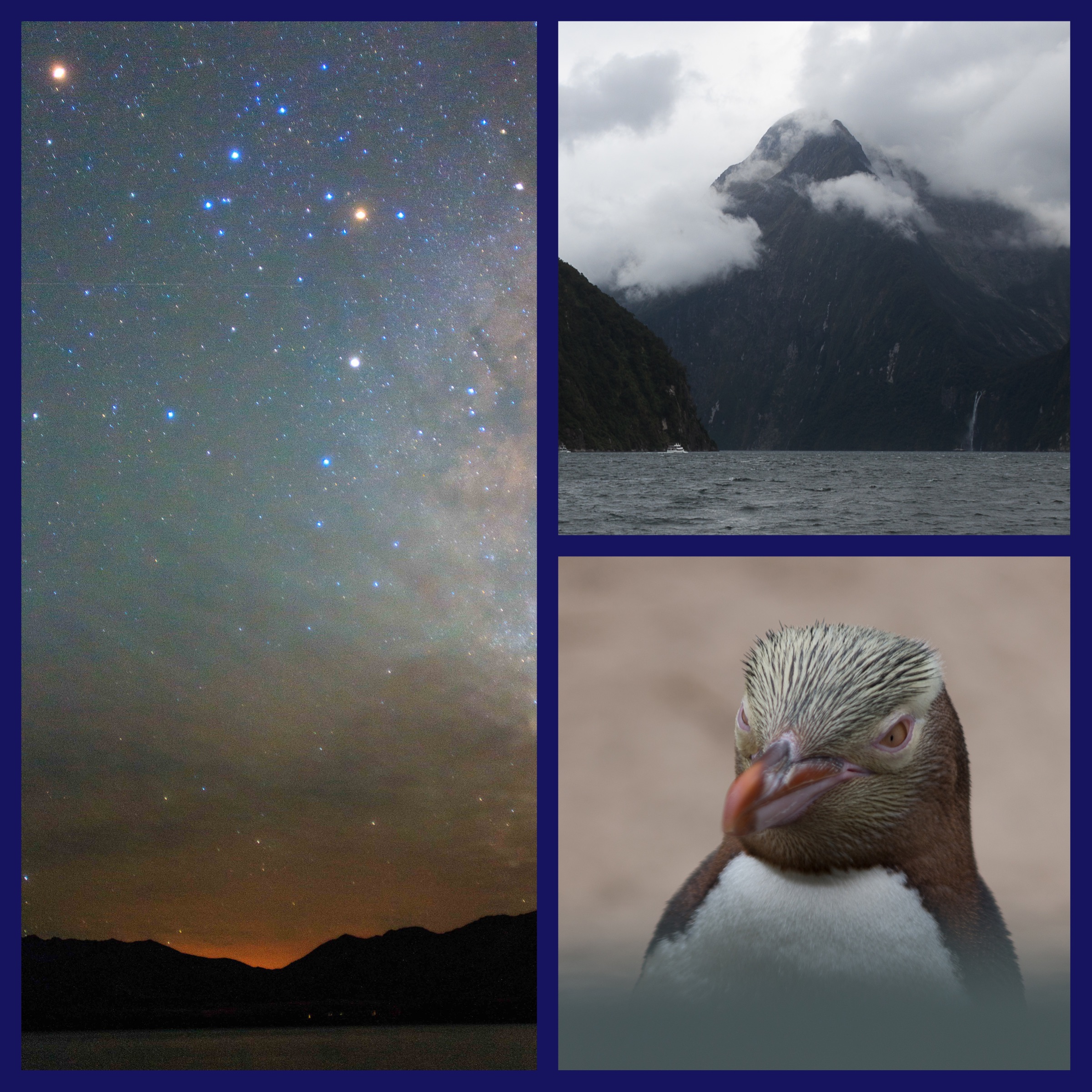
Milford Sound is part of the world nature heritage (UNESCO) and by sure one of the main attraction in New Zealand. Although the area is very crowded, the combination of numerous waterfalls, high and steep mountains and the unique light when the sun shines through the cloudy sky is spectacular.

What was awesome of our trip was the campsite. The campground was located in a light rainforest and included proper facilities and an amazing bistro. The guy from the office offered us a short guided tour in the evening. This tour was – as always – another invaluable experience. We made a typical boat trip through the fjords together with other tourists. There are about four or five boat operators in Milford Sounds and doing this kind of trip is almost a “must” for a typical visitor. We booked a middle vessel what it means, that we were less than one hundred people on board. Yes, there are bigger boats with a much more capacity.

However, we enjoyed the stunning waterfalls, the cute seals and the delightful excursion to the small but not less impressive swimming exhibition platform. This building contains an upper deck with some explanations about the platform itself and a lower deck made out of glass. There, you have a beautiful out view of the marine life in the fjord environment.

Milford Sound is one of the regions with the most amount of rainfall in the world. Because of this, the sea has two water layers, one pure water layer on the top and one salt water layer underneath. For this reason, there isn’t much light at the top of the salt layer. Therefore, many creatures who generally lives in the deep ocean, here can be observed (from the lower deck) in 20 meters deep water.

Penguin Safari at the Otago Peninsula

The penguin is right up on the top of the identify animals in New Zealand (besides the kiwi and the sheep, of course). Some of them are endangered (like the yellow-eyed penguin) but not all of them. Anyhow, the impact of civilization like human infrastructure and life activities along the shore is often badly for this birds.

The endangered yellow-eyed penguin is afraid of people and dogs. The penguins are not able to leave the sea until the beach is free of any potential danger (human and dogs). Sometimes, the young chicks are waiting too long for food and died of starvation. Another problem is the presence of the cats. They go around and eat some of the penguin eggs.

We did a private tour and learned a lot about the unique fauna in New Zealand and why all the plants and animals are so slowly and not made for the coexistence with mammals.

Milky way photography in the early morning

New Zealand (as well as Australia) is very suitable to take milky way pictures because there is very low light pollution. I also decided to take this chance and try to get some awesome pictures from the beautiful night sky.

For taking some magnificent photographs you have to consider some basic rules as to avoid the moon (expect empty moon), choose the summer time and set the right camera settings (ISO 3200, aperture 2.8, shutter 30 sec). And of course, you need a clear and cloudless night.

Unfortunately, the moon was almost full, and the moonrise was very late (4.15 am), I had to get up at 4:30 in the morning. The whole campground was like the lake in front of me – totally silent. I walked the short way down the beach and took some pictures from the beautiful sky panorama. The first day, Maggi was to tired to accompany me, but we did it a second time. I was interested in choose a better foreground. The first spot was not completely dark and not very appropriate to compose a well-proportionate photograph. 🙂

We got up very early (me again) and walked about ten minutes to a very silence and blackness place. Maggi took pleasure in catching the night sky, and I tried to get better pictures than the ones I had taken the night before. Sadly, I wasn’t able to make progress…

Schwiizerdütschi Zämefassig

Tschüss Neuseeland, danke für die geili Ziit! Bis wiedereinisch 😉
Und bis glii, Schwiiz 🙂
Weeks 10/11

This blog post is the second last post on our journey. We’ve decided to short the last three weeks into two posts. The internet on the campsite works mostly very slow because they are very crowded at the moment.

The last ten days were very excited. We experimented many different and engaging activities. New Zealand is a variety and has a climate which allowed us to do more things outdoors than in Australia. We hiked through an incredible coast path as well as we tasted some delicious white wine at Queenstown (the Mekka for all kinds of adventure activities).

Route

Day 67: Wellington – Momorangi (Beautiful Campground at the Beach)

Day 68: Momorangi – Motueka

Day 69: Stay in Motueka (great hiking trip in most beautiful national park of New Zealand)

Day 70: Motueka – Punakaiki (free camping park space)

Day 71: Punakaiki – Franz Joseph

Day 72: Franz Joseph – Fox Glacier

Day 73: Fox Glacier – Campsite Albert Town (Wanaka)

Day 74: Campsite Albert Town – Queenstown

Day 75: Stay in Queenstown (Interlaken of New Zealand)

Day 76: Queenstown – Te Anau

special recommendations

week 10:11

Hiking in the Alban Tasman National Park

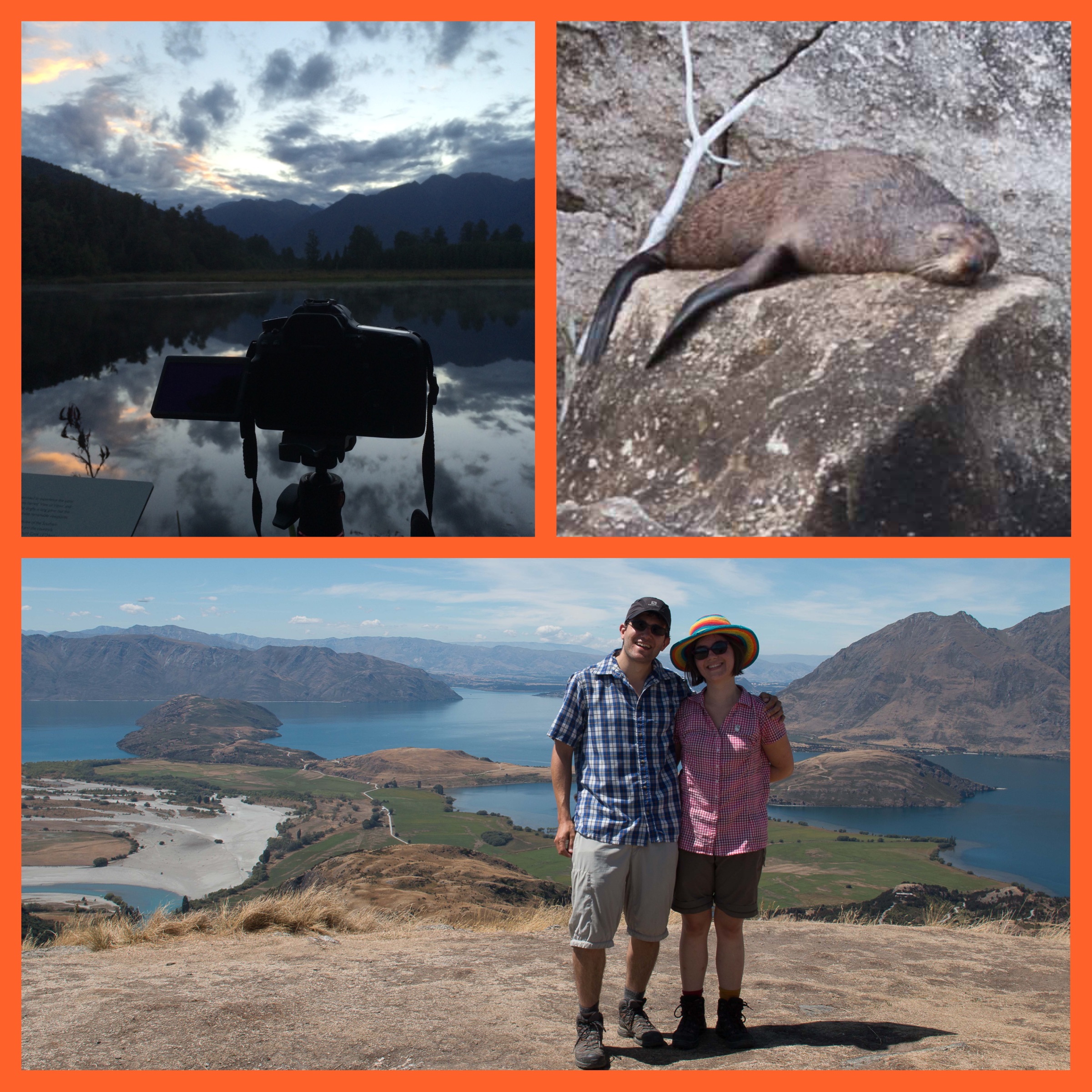
Hiking in New Zealand is much more comfortable as in Australia. The moderate climate and the safety environment (no snakes or spiders) are the most crucial factors in my point of view. Days before, we’ve met a friend who gave us some sportive tips for the southern island. She was travelling for the last weeks in this region with her bike.

During the check-in, the lady behind the desk asked for special wishes or activities for the next day. I liked this friendly service, and I already heard of a sea taxi which transports consumers to some good starting points for the great hiking trips. Of those reasons I asked for more information and promised her to come back later in the evening. I discussed the hiking trip with Maggi and then we booked the arrangement “Sand & Seals” which included two water taxi trips along the fabulous coastline and an approximately four-hour hiking trip.

We were picked up by a special shuttle bus from the campground at eight o’clock. The journey with the water taxi started at the “basecamp” by entering the watertaxi which was loaded on a tractor trailer. This big vehicle reached the shallow water slowly until the vessel began to drive in the water autonomically. The boat was quite speedy (maximum speed 40 kilometres). We came across with a special rock (split apple rock) and of course with some cute seals (almost like our cat murri).

The explanations of our guide were very amusing. An example:

“The split apple rock is called split apple rock because it looks like a split apple  – and it is a rock.”

The hiking (or more walking path) was an easygoing, mostly flat, stodgy (a lot of swiss and german tourists) but a very fantastic track. We took a lot of pleasure of it.

Lake Matheson at Dawn

The Lake Matheson is a very small lake, perhaps it’s more like a pond. Nevertheless, this lake is one of the most photographed subjects and is used by New Zealand’s tourist industry since 1940. The most beauty for us photographers is the good proportion of foreground (forest and some lake grasses) middle ground (lake with the mirror of the Southern Alps) and the background (with the high mountains including the Fox glacier and the highest peak Mount Cock).

We got up at five o’clock in the morning and reached the aiming spot at 6.15 together with a small group of Asian people with also quite expensive equipment. Unfortunately, some clouds have built up in the mountains. The sun came up, but it was hidden behind the clouds. The spent almost an hour on this spot and took some very nice pictures (also the mirrors of the bright clouds or the upgoing moon were spectacular), but I was a bit impatient at the end. Maggi could proof that. 🙂

After the “work” we rounded the lake and ate some delicious breakfast at the lake restaurant just around our parking space.

Speed Boat Experience

I think it was five or six weeks ago, I saw a translated documentary of my favorite media outlet (SRF) about New Zealand. Translated means it was originally swiss german and was turned into German because the TV station ARD bought this production.

Anyhow, in this docu, they told about speed boating and the adventure tourism in general, and I got in touch with this activity. I knew, this is something I want to try it.

We booked a ticket with an instant reply which means that we were allowed to do the speed trip twice. This trip was high-priced, and the reply was very reasonable compared with the first trip. We were driven to the starting station by a very comfortable bus. After a short briefing (no standing in the boat, no handshakes with the cliffs) the boat started to speed up the river up and down (up to 85 kilometers per hour). Sometimes our guide did some 360 turns. It was a fantastic experience, and we were both lucky to have the chance to have this adventure a second time.

Schwiizerdütschi Zämefassig

Wandere, Bootfahre, Wii und Whisky trinke – eifach cool 😉

Week 9

Week 9 was the week of hot water and slowness. The dilatoriness has two reasons: Firstly, we were recommended to speed up our new videos (because the week eight conclusion was a bit sleepy) and secondly, we took more time between the different places and drive fewer kilometers compared with the first week.

Hot water is shortly explained. Rotorua is surrounded by thermal activities such as geysers, hot mud and steamed soil. Tree of our five recommendations are related to this thermal theme.

Route

Day 60: Waitomo – Rotorua (via Hobbiton or Matamata)

Day 61: Stay in Rotorua

Day 62: Rotorua – Napier

Day 63: Napier – Masterton

Day 64: Masterton  – Wellington

Day 65: Stay in Wellington

Day 66: Stay in Wellington

special recommendations

week 9

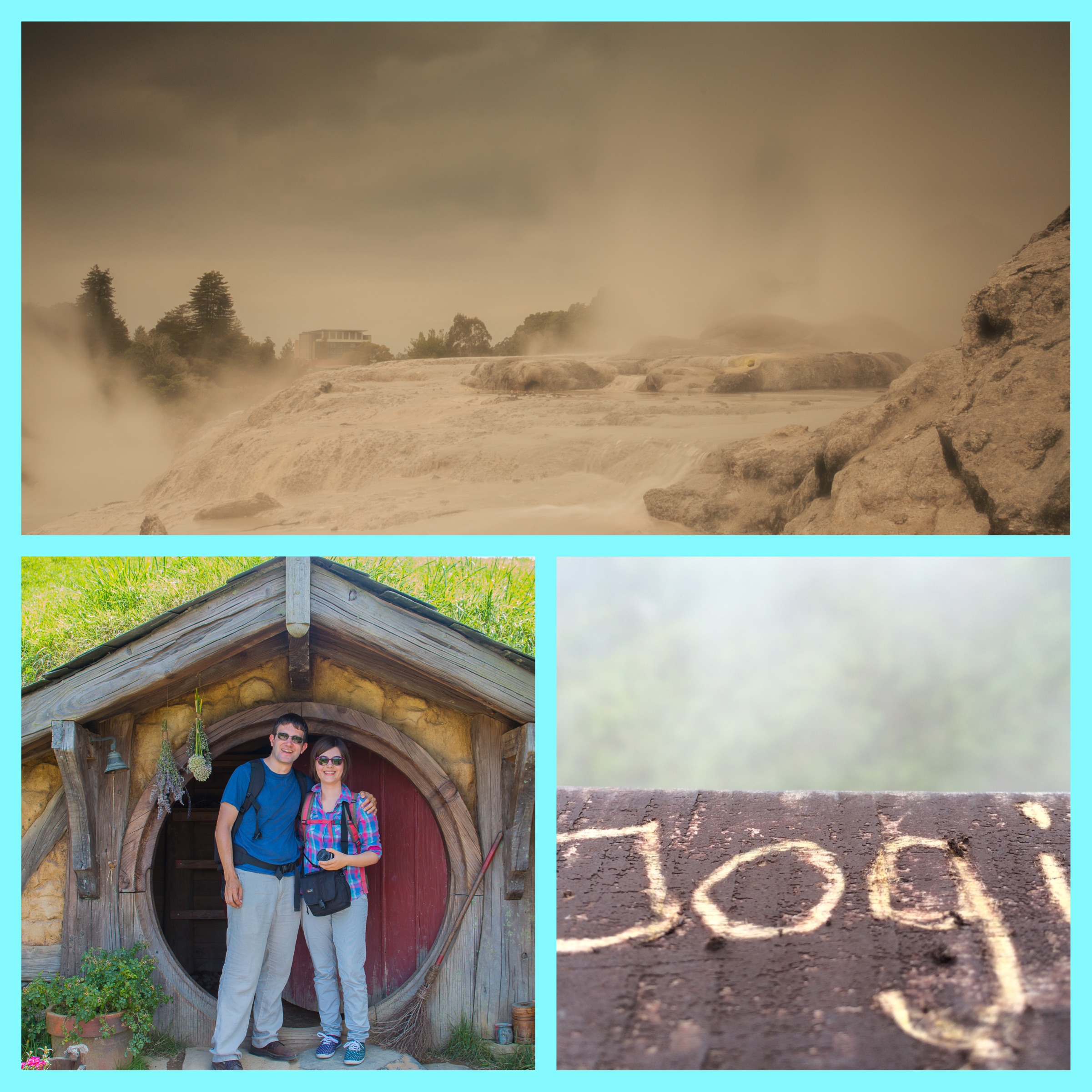
Hobbiton

The film “Lord of the Ring” and the country New Zealand are strongly connected. Quite all scenes in the trilogy were shot at various locations in the countryside or in studios in Wellington. There are huge books which explain all the movie sets. As well the stage director, Peter Jackson, is a superstar and extremely present.
Hobbiton is the movie set of the Hobbit village “Hobbiton” and was discovered at 1999 by Peter Jackson during an exploring flight with a Helicopter. Although the place was the ideal set for the village, severe landscape modification had to be done. For example, they had to build a new party ground above a little pond. To make this hard work more cost efficient, Peter Jackson asked the government for some help. The government sent him the army to assist. They supported the film crew to make the place suitable for filming (earthmoving, street construction, decoration).
According to the contract with the landlord and sheep farmer, the whole film set had to be deconstructed after they finished the movie work. Thankfully, a heavy storm prohibited additional work for about six months. During this time, the first film was presented in the cinema. Shortly afterward, the first fans asked the farmer for visiting the movie set. The old sheep rancher realized the enormous touristic potential and stopped the reduction.
These days, this farm-family became one of the richest in the region, and a little company guides the interested tourists around the old movie set.

Rotorua Centre – Hot water and Maori Culture

Rotorua is one of the major tourist attraction of the northern island of New Zealand. This place is one of the centres of the Maori culture as well as a salient hotspot for the thermal activities.

We bought two tickets for the park. The entree fees included a guided tour through the park. We had a heated discussion about the question if the tour is for free or not. In my opinion, the tour was optional but already paid (the tickets costs us a fortune).

Anyhow, the tour was a very great pleasure. Our guide, an inspiring Maori woman, was amusing and self-ironic. She explained us a lot of background stories about the place and how the Maori tribe used the thermal conditions. In the end, she also told us the fairy tale about the kiwi bird. We bought this storybook afterward.

Craters of the Moon walk

On the way to Napier, we saw a written street sign “Craters of the Moon walk”. I was in the mood to do a shorter walk and convinced Maggi to follow this hint. The weather wasn’t so friendly; it was a bit rainy but not too hot.

We both shipped big hiking shoes, raincoats and rain trousers to New Zealand. So, why do not use them for the first time?

There was an entry fee to pay, but the short walking trip was an impressive experience. The path led us through an unreal landscape with various of steam sources.

It was more a relaxed stroll than a serious hiking, but nevertheless, an absolutely must do.

Wellness in Napier

The day we reached Napier was a rainy day. Therefore, we decided to spend some time in  hot water. We both like visiting thermal sourced baths in Switzerland. Because there were not so many opportunities in Australia to take a warm bath, we were lucky to find a thermal bath in Napier.

Te Papa – National Museum of New Zealand in Wellington

Te Papa is the national museum of New Zealand. Every tourist guide highly recommends it, and it is for free. The museum displays the different aspects of New Zealand’s history as well as a special exhibition like the today dreamworks presentation.

As always, we booked a guided instruction tour. From my point of view, guided tours are one of the best ways to become familiar with the content of a museum. The guide (a female student in geography) was not bad, but she explained the various areas a bit in a hurry.

Schwiizerdütschi Zämefassig

Ändlich wieder mau e Badwanne! Was fürnes Träumli 😉